In response to a blog post by seasoned educator and well-known blogger, Jill Jenkins, let's talk about creating a bully-proof environment in your classroom.
To read Jill's post, "Reduce Bullying by Creating a Community", click on the image below.

Jill talks about reducing bullying by creating a community within the classroom, and this, no doubt, is the best path to take. With a sense of community, students can feel comfortable, secure, and most of all...valued. With this, they learn to value each other, and they value their own role within the group. There are many strategies and programs available to educators to work toward developing a community within the classroom, and Jill offers great ideas and examples, but the concern that I feel compelled to add to the discussion is the issue of educators latching on to programs and tools offered to improve classroom community, without any focus or possibly even awareness of the underlying psychological piece that they are responsible to personally manage.
For example, kindergarten teachers love the morning meeting concept. It is truly a great way to start the day, and it's all about community building. Students greet each other as they begin, touch base on what is going on in their classroom for the day, share personal experiences with each other, celebrate birthdays, and much more. This is a wonderful community-building framework. In order for these ideas and programs that we adopt to truly be effective, though, the adults involved must consistently promote the psychological components of that desired community.
For example, kindergarten teachers love the morning meeting concept. It is truly a great way to start the day, and it's all about community building. Students greet each other as they begin, touch base on what is going on in their classroom for the day, share personal experiences with each other, celebrate birthdays, and much more. This is a wonderful community-building framework. In order for these ideas and programs that we adopt to truly be effective, though, the adults involved must consistently promote the psychological components of that desired community.
Do you see this happening in your classroom?
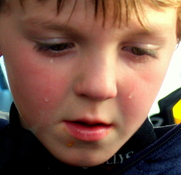
"Psychological Membership" is the Key to Community-Building
The feeling of belonging fosters respect and collaboration
across the classroom and the school.
across the classroom and the school.
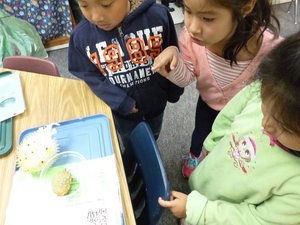
Psychological Membership is the feeling of belonging, a term coined by Carol Goodenow of Tufts University in 1993. When one feels that they belong, he knows that he can take risks. This means asking questions because the question will never be laughed at or deemed a "stupid question" by anyone in the room. This means that he knows that every other person in the room is a friend during the time that is spent together. This means that he knows that his time, ideas, work and talents are valued by everyone around him. He knows that no one is going to tease or make fun of him. He feels safe to ask questions, make suggestions, share ideas, and to make a mistake in front of any one or all of the group.
What Does the Research Tell Us About Belonging?
- Walker and Green (2009) tell us that with regard to Maslow's Hierarchy of Needs, the basic human needs of food and shelter are the only precursors to the need for love and belonging within the context of personal growth and development.
- Johnson's findings (2009) indicate that both teacher support and classroom belongingness have a significant impact on student achievement, particularly in the areas of student autonomy, investment in learning, and school safety.
- Sutton and Wheatley (2003) studied secondary students and shared that they place great value on teachers who care about them. They also presented a connection between a teacher's sense of humor and high content mastery in the classroom.
- Those who Shaw (2010) labeled as "slow learners" are demonstrated to require close relationships with their teachers in order to develop academic skills and successes.

Fostering the Caring Among Kids
The classroom environment created by the morning meeting routine is ideal. We love to see this routine at work. It is a thing of beauty. However, does it carry through the day? Only if identical expectations and modeling carry through the day. When a student gives a wrong answer, do you say "No, that's not it."? I hope you don't say, "Wrong!" We can learn to say, "I like the way you are thinking, and I can see where your answer came from, but I'm looking for an answer that ....(add a clue here)." The "No" knocked that student down, and when a teacher knocks down students, then students feel comfortable knocking down students. The "I like the way" answer demonstrated an understanding of the student and his way of thinking. He can easily recover from having the wrong answer and can even respond to the clue to come up with the correct answer. No respect lost here...from others or with self.
Do you use sarcasm in your classroom? Do you call kids out? Do you respond to an inappropriate or sarcastic answer from a student with the same type of behavior? Reflect. It matters. Did you know that psychologically, saracasm is one of the most damaging forms of communication? In order to model good citizenship and treating others kindly, we must make it a moment-to-moment effort to demonstrate what kindness, friendship, and understanding look like. Children will emulate what they see you do.
Do you use sarcasm in your classroom? Do you call kids out? Do you respond to an inappropriate or sarcastic answer from a student with the same type of behavior? Reflect. It matters. Did you know that psychologically, saracasm is one of the most damaging forms of communication? In order to model good citizenship and treating others kindly, we must make it a moment-to-moment effort to demonstrate what kindness, friendship, and understanding look like. Children will emulate what they see you do.
Lead by Example
"It is the idea that what a leader does and how a leader behaves has a direct influence on how everyone else in the organization acts." Interestingly, this statement from The Press Enterprise's article, From Top-Down to Trickle-Down Management fits every classroom, every school, and every workplace. A happy, caring, considerate leader imposes those virtues upon those who follow her, by interacting with the group according to those virtues. On the contrary, a leader who is unhappy, insensitive or sarcastic sets the tone for a negative environment. What tone are you setting in your classroom on a daily, or even an hourly basis? What tone is your director (principal) or team imposing on you?

A 6-year old made a silly suggestion to me today. I thanked him and described a way in which I might be able to use the idea he recommended. His reaction was this: "Oh good! That means that my idea was valuable!" I experienced a feeling of shock and concern when I realized his assessment of our conversation. I wonder how often children judge themselves by our responses but don't express it and walk away feeling less than valued.
Provide Self-Regulation Techniques
The "class clown" or "funny guy" isn't working toward a spot at the Improv!
They are overcoming insecurity, anxiety, or discomfort by creating laughter and peer attention that mask the issue. Note that the class clown act is a clear indicator that you don't yet have a fully embraced sense of community...someone in your class feels anxious about how he is being viewed or judged by his peers. Do you laugh or do you demonstrate disapproval? A great choice is to demonstrate understanding and then offer an alternative behavior that enables the funny guy to stay focused or to ask a question when feeling uncertain. I had a self-proclaimed class clown in my 5th grade class. I soon realized that he was insecure about his academic abilities. I had him work on projects with a group of high-academic students. It was a scary transition for him at first, which I monitored and stayed involved with, but coupling that experience with the repeated offer of a "quiet place at the table over there" to work so that he was not distracted or getting into trouble for disrupting, worked beautifully. He soon expressed his amazement that he could work with and socialize with his new group, and he took many opportunities to move himself to the "quiet table over there" in order to stay focused during large group discussions, when he would have historically been disruptive. It wasn't long before his class clown days were history!
Offer Developmentally Appropriate Problem-Solving Strategies

In the early childhood classroom, we use the strategy, Give A Bug and A Wish.
We explain it at the start of the school year, we model, practice, and encourage it.
Jane pushed me when I got the ball. I gave Jane A Bug and A Wish:
"It Bugs Me when you push me, I Wish You wouldn't push me when you want the ball."
This strategy teaches children from a young age to express what they are feeling, to stand up for themselves, and to stop someone from crossing boundaries with them. Using the strategy builds confidence and teaches that expressing their feelings and discomfort with situations gets results. And there is no need for anyone to get upset.
The other piece of this strategy that makes it effective is the adult role, of course. The rule is that a bug and a wish is a serious tool, and it can only be used when the child is seriously bothered by the behavior of another child. We role play scenarios to determine when it is appropriate to use this tool. Also, it is made clear to all that once you have received A Bug and A Wish, you must comply forever. If you do not, the teacher is notified and consequences for poor choices are followed. (This may be thinking time during recess or some other supportive measure to teach the offender some self-regulation.)
We explain it at the start of the school year, we model, practice, and encourage it.
Jane pushed me when I got the ball. I gave Jane A Bug and A Wish:
"It Bugs Me when you push me, I Wish You wouldn't push me when you want the ball."
This strategy teaches children from a young age to express what they are feeling, to stand up for themselves, and to stop someone from crossing boundaries with them. Using the strategy builds confidence and teaches that expressing their feelings and discomfort with situations gets results. And there is no need for anyone to get upset.
The other piece of this strategy that makes it effective is the adult role, of course. The rule is that a bug and a wish is a serious tool, and it can only be used when the child is seriously bothered by the behavior of another child. We role play scenarios to determine when it is appropriate to use this tool. Also, it is made clear to all that once you have received A Bug and A Wish, you must comply forever. If you do not, the teacher is notified and consequences for poor choices are followed. (This may be thinking time during recess or some other supportive measure to teach the offender some self-regulation.)
Children take this strategy very seriously because they feel empowered!
It also diminishes tattling dramatically!
The Classroom Community Works
because
Bullying Doesn't Exist When Everyone Feels Valued.
Psychological Membership is the Key.
Build a Classroom Full of Friends...A School Full of Friends.
(for Staff and Students)
Thanks again, Jill, for bringing up this ever-important topic!
 RSS Feed

